
 Marc M
Spanish Listening Practice
15 Spanish Movie Picks for Learning Spanish on Netflix
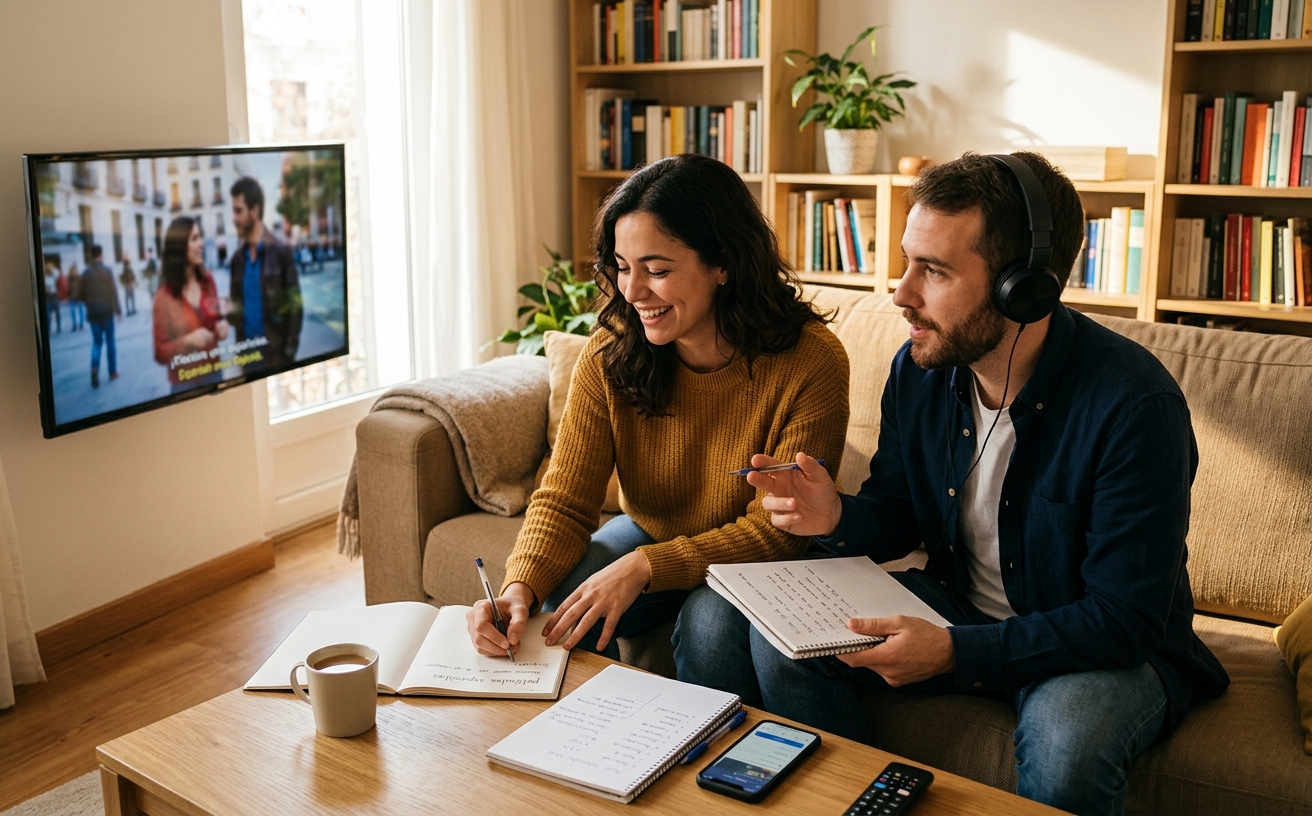
The best Spanish movie for learning Spanish is not always the most famous one. Pick a film or show scene with clear speech, repeatable everyday phrases, and subtitle controls you can use for active practice.
Key takeaways
- Choose movies by speech clarity, topic, and repeatable phrases, not just popularity.
- Use subtitles as training wheels: English first if needed, Spanish next, then one replay without pausing.
- Do not turn one movie night into a vocabulary flood. Five phrases per session is enough.
- Pair movie scenes with a structured Spanish book when you need daily repetition after watching.
Who this guide is for
This guide is for beginner and lower-intermediate Spanish learners who want Netflix to support listening, pronunciation, vocabulary, and confidence. It is especially useful if you already enjoy movies but need a study routine that turns watching into language practice.
Netflix availability changes by country and month, so this page focuses on what to search for and how to study the movie once you find it. Before planning a full study week around one title, open the title page and confirm that Spanish audio or Spanish subtitles are available in your account.
The learner decision
Choose your movie based on the skill you need today:
| If you need… | Choose this kind of Spanish movie | What to practice |
|---|---|---|
| Clear beginner listening | Family, school, or everyday comedy scenes | Greetings, feelings, requests, likes, dislikes |
| Travel confidence | Road trip, hotel, restaurant, or city scenes | Directions, ordering, prices, transport phrases |
| Conversation rhythm | Dialogue-heavy dramas with short exchanges | Turn-taking, filler words, polite disagreement |
| Accent exposure | Movies from Mexico, Spain, Colombia, Argentina, or Chile | Pronunciation differences and regional vocabulary |
| Vocabulary growth | A story you already understand in English | Recognizing familiar plot words in Spanish |
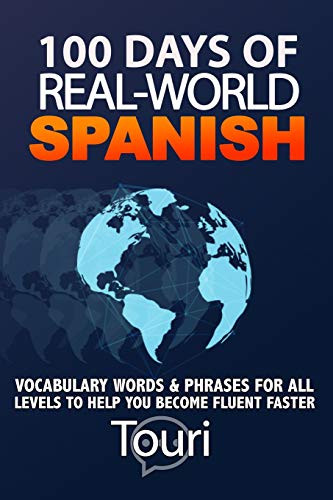
100 Days of Real World Spanish
After you collect phrases from a scene, use 100 Days of Real World Spanish for the daily repetition that movies alone do not provide.
15 movie picks and search angles
Use these as practical search angles inside Netflix. The exact catalog can vary, but the learning use case stays the same.
- Everyday friendship story. Good for greetings, plans, texting language, and casual reactions.
- Family comedy. Good for emotions, household words, polite requests, and repeated everyday verbs.
- School or coming-of-age movie. Good for introductions, opinions, schedules, likes, dislikes, and simple conflict.
- Romantic comedy. Good for questions, invitations, compliments, apologies, and natural back-and-forth dialogue.
- Travel or city movie. Good for asking where something is, ordering food, paying, and talking about places.
- Mystery with clear scenes. Good for question words, descriptions, uncertainty, and past-tense context.
- Sports or competition movie. Good for commands, encouragement, numbers, time, and short high-energy phrases.
- Food-centered story. Good for restaurant Spanish, preferences, ingredients, quantities, and polite service phrases.
- Workplace comedy or drama. Good for meetings, requests, schedules, responsibilities, and professional tone.
- Documentary with one narrator. Good for slower input when scripted dialogue feels too fast.
- Animated film with Spanish audio. Good for familiar stories, clear emotion, and repeatable lines.
- Crime or police drama. Good for caution, descriptions, locations, and formal questions, but usually better for intermediate learners.
- Historical drama. Good for listening stamina and cultural context, though vocabulary may be less useful for beginners.
- Stand-up or sketch comedy. Good for rhythm and culture, but use short clips because jokes can be fast and regional.
- A movie you have already seen in English. Good for beginners because the known plot frees attention for Spanish phrases.
The 25-minute Netflix study routine
One full movie can be too much for a learner. A short scene is easier to repeat, easier to remember, and easier to turn into usable Spanish.
- Pick one scene. Choose 3 to 5 minutes with clear dialogue and a normal situation.
- Watch for meaning. Use English subtitles if you need them the first time. Do not pause every sentence.
- Switch to Spanish support. Replay with Spanish subtitles or Spanish audio and write five phrases that could be useful in real life.
- Say the phrases aloud. Copy the rhythm, not just the words. Mark one phrase that feels most useful.
- Replay once more. Watch the same scene again without stopping. The goal is recognition, not perfection.
- Review tomorrow. Rewatch only the same scene before starting something new.
What phrases to save
Do not save every unknown word. Prioritize phrases that can move from the screen into your own speech.
| Save this | Skip this for now | Why |
|---|---|---|
| Short greetings and closings | Long monologues | You can reuse greetings immediately. |
| Questions people ask in daily life | Rare plot-specific vocabulary | Questions build conversation confidence. |
| Useful reactions like “I understand” or “wait” | Slang you cannot place | Reactions help you stay in a conversation. |
| Restaurant, travel, family, or work phrases | Technical terms from one scene | Common settings repeat across movies and real life. |
How beginners should use subtitles
Subtitles are useful when they help you stay with the scene. They become a problem only when you read English for the whole movie and never listen to Spanish. A simple order works well: first understand the scene, then replay in Spanish, then test recognition.
If Spanish subtitles do not match the Spanish audio exactly, do not panic. Subtitles are often adapted for reading speed. Treat them as support, then trust the audio for pronunciation and rhythm.
Internal links for your next step
If movies feel too fast, start with Spanish reading practice with audio or a listening and reading routine using dialogues. If you want written reinforcement after watching, use a 20-minute Spanish reading routine. For speaking situations, pair movie phrases with Spanish dialogues for restaurants, hotels, shopping, and emergencies.
Source notes
Netflix explains that available audio and subtitle languages can vary by title, device, and location. Use the title’s audio and subtitle menu to confirm what is available before choosing it for practice. For the study method, this page uses a conservative input-plus-repetition approach: comprehensible scenes, small phrase capture, spoken rehearsal, and next-day review.
Common mistakes
- Watching too much at once. A whole movie can feel productive while producing very little recall.
- Choosing a scene that is too hard. If you cannot follow the situation after two passes, choose a clearer scene.
- Collecting too many words. Five useful phrases beats thirty forgotten words.
- Ignoring pronunciation. Say the phrase aloud while the actor’s rhythm is still fresh.
- Changing titles every session. Repetition is where the learning happens.
FAQ
Can I learn Spanish only by watching Netflix?
Netflix can help listening and vocabulary, but it should not be your only method. Most learners need structured reading, speaking practice, review, and feedback alongside movies.
Should beginners use English or Spanish subtitles?
Use English subtitles briefly if you need the plot, then replay the same short scene with Spanish subtitles or Spanish audio focus. The second pass is where study begins.
How many Spanish movies should I watch per week?
One repeated scene per day is more useful than several full movies watched passively. Aim for five short study sessions before adding a new title.
What should I do after watching?
Write five phrases, say them aloud, and use one in a sentence about your own life. The next day, replay the same scene before choosing a new one.