 Marc M
Conversational Spanish
40 Useful Spanish Phrases for Travel: What to Learn Before Your Trip
If you need useful Spanish phrases for travel, start with the lines that help you order food, ask basic directions, handle payment, and explain simple problems. This guide gives you a focused phrase list, shows which phrases matter most for a short trip, and points you to the next Touri study resource if you want a fuller practice plan.
What this page helps you decide
- If you only have a few days to prepare, memorize the first 10 phrases in this guide and use the rest as review.
- If you get nervous speaking, focus on short polite questions instead of long full-sentence scripts.
- If your trip is food and city heavy, spend extra time on ordering, directions, and payment phrases.
- If you want more than a phrase list, move next to a daily routine or a Touri Spanish book that gives you repetition.
Evidence used for this refresh
This page was refreshed around actual Touri search impressions, not a generic travel-post template. The strongest Google Search Console phrases included spanish phrases for travel, helpful spanish phrases for travel, useful spanish phrases for travel, spanish phrases for tourists, and spanish words to know when traveling. That signal suggests readers want a practical phrase pack they can use quickly, not a long article about why travel vocabulary matters.
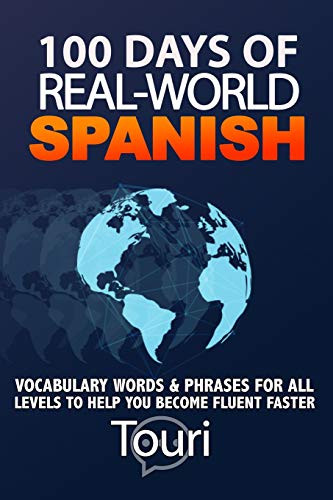
100 Days of Real World Spanish
If you want to turn travel phrases into a daily practice habit, use 100 Days of Real World Spanish as the next step after this guide.
The first 10 travel phrases to learn
If you only remember ten lines, make them the ones you can reuse in many places. These cover greeting, politeness, price, directions, and basic problem-solving.
| English | Spanish | Why it matters |
|---|---|---|
| Hello / Good morning | Hola / Buenos días | Starts almost every interaction more smoothly. |
| Please | Por favor | Useful in restaurants, taxis, and stores. |
| Thank you | Gracias | High-frequency politeness phrase. |
| Excuse me | Perdón / Disculpe | Good for getting attention respectfully. |
| How much does it cost? | ¿Cuánto cuesta? | Helpful for shopping, taxis, and markets. |
| Where is…? | ¿Dónde está…? | Core phrase for directions. |
| I would like… | Quisiera… | Useful for ordering and requests. |
| The check, please | La cuenta, por favor | One of the most practical restaurant lines. |
| I do not understand | No entiendo | Safer than pretending. |
| Do you speak English? | ¿Habla inglés? | Useful when the conversation goes beyond your level. |
40 useful Spanish phrases for travel
The best way to use this list is by situation. Choose the section that matches your trip, then rehearse the same set several times out loud. Travel Spanish sticks better when you can picture the moment in which you will say it.
Greetings and politeness
- Hola. – Hello.
- Buenos días. – Good morning.
- Buenas tardes. – Good afternoon.
- Buenas noches. – Good evening / good night.
- Por favor. – Please.
- Gracias. – Thank you.
- Muchas gracias. – Thank you very much.
- Perdón. – Excuse me.
Directions and getting around
- ¿Dónde está el baño? – Where is the bathroom?
- ¿Dónde está la estación? – Where is the station?
- ¿Cómo llego al hotel? – How do I get to the hotel?
- ¿Está lejos? – Is it far?
- A la derecha. – To the right.
- A la izquierda. – To the left.
- Todo recto. – Straight ahead.
- ¿Puede mostrarme en el mapa? – Can you show me on the map?
Food and ordering
- Quisiera esto, por favor. – I would like this, please.
- ¿Qué me recomienda? – What do you recommend?
- Sin picante, por favor. – Without spice, please.
- Sin carne, por favor. – Without meat, please.
- Tráigame agua, por favor. – Please bring me water.
- La cuenta, por favor. – The check, please.
Shopping and payment
- ¿Cuánto cuesta? – How much does it cost?
- Es muy caro. – It is very expensive.
- ¿Tiene algo más barato? – Do you have something cheaper?
- ¿Aceptan tarjeta? – Do you accept cards?
- ¿Necesito efectivo? – Do I need cash?
- Quiero comprar esto. – I want to buy this.
Transport
- Necesito un taxi. – I need a taxi.
- ¿Puede llevarme a esta dirección? – Can you take me to this address?
- ¿A qué hora sale? – What time does it leave?
- ¿Este bus va al centro? – Does this bus go downtown?
- ¿Dónde compro el boleto? – Where do I buy the ticket?
Problems and basic help
- No entiendo. – I do not understand.
- ¿Puede hablar más despacio? – Can you speak more slowly?
- ¿Puede repetirlo, por favor? – Can you repeat it, please?
- ¿Habla inglés? – Do you speak English?
- Necesito ayuda. – I need help.
- Estoy perdido / perdida. – I am lost.
- Necesito un médico. – I need a doctor.
How to study these before a trip
Do not treat this as a one-time reading assignment. A short trip-prep routine works better.
| Day | Focus | What to do |
|---|---|---|
| Day 1 | Core 10 phrases | Read them aloud five times and cover the English on the last round. |
| Day 2 | Food and directions | Roleplay ordering and asking for the bathroom, hotel, or station. |
| Day 3 | Payment and transport | Practice prices, tickets, and taxi phrases with numbers. |
| Day 4 | Help phrases | Practice slow speech, repetition, and “I do not understand.” |
| Day 5+ | Mixed review | Shuffle the phrases and answer from the travel situation, not from memory order. |
Pick your phrase set by trip type
A weekend in Mexico City, a resort stay, and a multi-city train trip do not need the exact same first phrase set. Use the phrase list above, but weight your practice toward the moments you will repeat most often.
| Trip type | Practice first | Useful next Touri guide |
|---|---|---|
| Restaurant and cafe trip | Ordering, recommendations, water, bill, payment | Longer travel phrase set |
| City exploring | Directions, bathrooms, station, map, taxi address | Daily real-world Spanish plan |
| First Spanish-speaking trip | Politeness, slow speech, repetition, help phrases | Daily real-world Spanish plan |
Choose the next step after this phrase list
If the trip is close, keep your plan simple: practice the first 10 phrases until they feel automatic, then add the sections you will actually use. If you have several weeks, move from isolated phrases into short dialogues and story-based review so you can recognize the same words in fuller sentences.
| Your goal | Best next step | Touri path |
|---|---|---|
| One upcoming vacation | Use this page plus the longer 100-phrase checklist. | Practice 100 travel phrases |
| Build a daily Spanish habit | Review practical words and phrases for a few minutes each day. | Follow a 100-day Spanish plan |
| Move beyond phrasebook recall | Add stories, dialogues, and repeated reading practice. | Browse Touri Spanish books |
What to skip if your trip is soon
If you leave in a few days, skip long grammar study and rare vocabulary lists. You will get more value from being able to ask for water, pay a bill, confirm a bus, or say that you need help than from memorizing dozens of irregular verbs. Travel Spanish should reduce friction first. Fluency can come later.
Common mistakes with travel phrase lists
- Trying to memorize 100 disconnected phrases in one night.
- Reading silently without saying the lines aloud.
- Skipping polite basics such as por favor and gracias.
- Learning rare words before mastering questions you will use every day.
- Assuming one phrase list is enough practice for real conversation speed.
When to move beyond a phrase list
A phrase list is enough for a short trip, but it has limits. If you want better recall, listening confidence, or more natural sentence patterns, connect this page to a repeatable study path. Touri readers usually move next to a practical routine such as 100 Days of Real World Spanish: A Daily Vocabulary Plan or a broader travel guide such as Spanish Phrases for Travel: 100 Practical Phrases to Practice Before a Trip.
FAQ
What Spanish phrases should I learn first for travel?
Start with greetings, please and thank you, where is…, how much does it cost, I would like…, the check please, I do not understand, and can you speak more slowly.
How many travel phrases do I really need?
Ten to twenty high-frequency phrases can cover a short trip surprisingly well. Learn more only after the first set feels automatic.
Is a phrase list enough to speak Spanish on vacation?
It is enough for many routine moments, but not for fluent conversation. Use it as a practical minimum, then add repetition, listening, and simple dialogue practice if you want more confidence.