

 Marc M
Conversational Spanish
The Most Common Spanish Greetings, Introductions and Goodbyes
For a safe beginner default, say Hola, add Buenos días or Buenas tardes when appropriate, introduce yourself with Me llamo…, and close with Hasta luego. The important choice is not memorizing every greeting at once; it is choosing a small set that fits the time of day and the formality of the conversation.

Choose your first phrases by situation
| Situation | Start with | Then add |
|---|---|---|
| Any friendly conversation | Hola. — Hello. | ¿Cómo estás? — How are you? (informal) |
| Shop, hotel, office, or first meeting | Buenos días. — Good morning. | ¿Cómo está? — How are you? (formal) |
| Introducing yourself | Me llamo Ana. — My name is Ana. | Mucho gusto. — Nice to meet you. |
| Leaving but likely meeting again | Hasta luego. — See you later. | Que tengas un buen día. — Have a good day. |
| Ending a brief, formal exchange | Muchas gracias. — Thank you very much. | Adiós. — Goodbye. |
Common Spanish greetings
Hola is the most flexible greeting. It does not change for the time of day, and it can be paired with a more specific greeting. Spanish greetings vary by country, region, age, and relationship, so listen to how people around you greet one another and match the setting.
| Spanish | English | When to use it |
|---|---|---|
| Hola. | Hello. | A neutral, widely useful opening. |
| Buenos días. | Good morning. | From morning into the earlier part of the day. |
| Buenas tardes. | Good afternoon / evening. | After midday and before night; timing varies by region. |
| Buenas noches. | Good evening / good night. | At night, both on arrival and when leaving. |
| ¿Cómo estás? | How are you? | Informal singular: a friend, peer, or child. |
| ¿Cómo está? | How are you? | Formal singular: respectful distance or a formal setting. |
| ¿Qué tal? | How’s it going? | Casual and conversational. |
| ¿Cómo te va? | How’s it going for you? | Friendly and informal. |
| ¡Qué gusto verte! | It’s great to see you! | Warm greeting for someone you already know. |
| Bienvenido / Bienvenida. | Welcome. | Match the ending to the person being welcomed. |
How to answer “How are you?”
You do not need a long answer. Choose one natural response, then return the question. With usted, use ¿Y usted?; with tú, use ¿Y tú?
- Muy bien, gracias. ¿Y tú? — Very well, thank you. And you?
- Bien, gracias. ¿Y usted? — Fine, thank you. And you?
- Todo bien. — Everything is fine.
- Más o menos. — So-so.
- Estoy un poco cansado / cansada. — I am a little tired.
Spanish introductions that beginners can reuse
For a first conversation, learn a four-part introduction: your name, where you are from, where you live, and why you are learning Spanish. Replace the bold example information with your own.
| Spanish phrase | Meaning |
|---|---|
| Me llamo Lucía. | My name is Lucía. |
| Soy Lucía. | I am Lucía. |
| ¿Cómo te llamas? | What is your name? (informal) |
| ¿Cómo se llama? | What is your name? (formal) |
| Soy de Canadá. | I am from Canada. |
| Vivo en Chicago. | I live in Chicago. |
| Estoy aprendiendo español. | I am learning Spanish. |
| Mucho gusto. | Nice to meet you. |
| Encantado / Encantada. | Delighted to meet you. |
| Te presento a Carlos. | Let me introduce you to Carlos. |
| Él es mi amigo. | He is my friend. |
| Ella es mi compañera. | She is my colleague / classmate. |
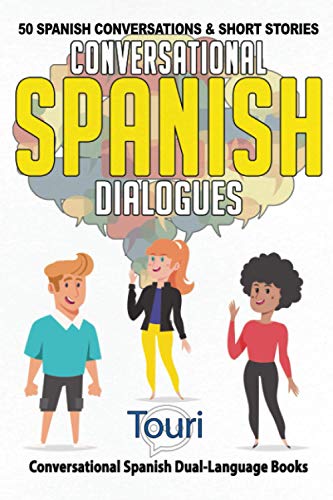
Conversational Spanish Dialogues
Move from isolated greetings into complete beginner conversations for introductions, travel, shopping, dining, and everyday situations.
Tú or usted: which “you” should you choose?
Use tú for informal singular conversation and usted for formal or respectful singular conversation. The boundary differs across Spanish-speaking communities. If you are uncertain in a professional or first-meeting setting, beginning with usted is a cautious choice; follow the other person’s lead if they invite tú.
| Informal | Formal | English |
|---|---|---|
| ¿Cómo estás? | ¿Cómo está? | How are you? |
| ¿Cómo te llamas? | ¿Cómo se llama? | What is your name? |
| ¿De dónde eres? | ¿De dónde es? | Where are you from? |
| ¿Y tú? | ¿Y usted? | And you? |
Common Spanish goodbyes
| Spanish | English | Best fit |
|---|---|---|
| Adiós. | Goodbye. | Direct, standard farewell. |
| Hasta luego. | See you later. | Flexible even when “later” is not literal. |
| Hasta pronto. | See you soon. | You expect to meet again fairly soon. |
| Hasta mañana. | See you tomorrow. | You expect to meet the next day. |
| Nos vemos. | See you. | Friendly, common closing. |
| Cuídate. | Take care. | Informal singular. |
| Que tengas un buen día. | Have a good day. | Informal singular. |
| Que tenga un buen día. | Have a good day. | Formal singular. |
| Buenas noches. | Good night. | Leaving at night or going to bed. |
| Fue un placer conocerle. | It was a pleasure to meet you. | Polite, formal close after a first meeting. |
Three mini-dialogues to practice aloud
1. Friendly first meeting
A: Hola, me llamo Elena. ¿Cómo te llamas?
B: Soy David. Mucho gusto.
A: Igualmente. ¿De dónde eres?
B: Soy de Estados Unidos. ¿Y tú?
2. Polite morning greeting
A: Buenos días. ¿Cómo está?
B: Muy bien, gracias. ¿Y usted?
A: Bien, gracias. Que tenga un buen día.
B: Igualmente. Hasta luego.
3. Leaving a casual conversation
A: Bueno, me tengo que ir. — Well, I have to go.
B: Está bien. Nos vemos mañana. — Okay. See you tomorrow.
A: Sí, hasta mañana. Cuídate. — Yes, see you tomorrow. Take care.
A 10-minute practice routine
- Pick one setting. Choose a friend, a hotel desk, a shop, or a first meeting.
- Select five lines. Use one greeting, one question, one response, one introduction, and one goodbye.
- Read both roles. Say a mini-dialogue slowly twice, then once without looking.
- Personalize it. Replace the name, city, country, and reason for learning Spanish.
- Review tomorrow. Repeat the same five lines before adding new ones.
If you want a broader practice sequence, continue with the beginner Spanish dialogues guide. Travelers can build from these openings into 100 practical Spanish travel phrases. To compare Touri resources by level and format, use the Spanish books hub.
Common mistakes to avoid
- Translating “good evening” too mechanically. Buenas tardes and buenas noches divide the day differently across regions.
- Mixing tú and usted forms. Learn each question as a complete phrase so the verb and pronoun stay together.
- Using only “adiós.” It is correct, but hasta luego and nos vemos often sound more conversational.
- Memorizing without answering. Practice the likely reply and the return question, not just the opening line.
- Expecting one phrase to fit every country. Treat this list as a widely understandable foundation and notice local choices when you listen.
FAQ
What is the most common greeting in Spanish?
Hola is the most flexible common greeting. You can use it alone or pair it with buenos días, buenas tardes, or buenas noches.
What is a polite way to introduce yourself in Spanish?
Say Hola, me llamo… followed by your name, then Mucho gusto. In a formal exchange, ask ¿Cómo se llama?; in an informal exchange, ask ¿Cómo te llamas?
What is the difference between hasta luego and adiós?
Both are correct. Adiós is a direct goodbye, while hasta luego means “see you later” and is a flexible, conversational farewell.
Should a beginner use tú or usted?
Use tú for informal singular conversation and usted for formal or respectful singular conversation. Regional norms vary, so start politely and follow the other person’s lead.