

Medical Spanish
Spanish for EMTs and Urgent Care Teams
Spanish for EMTs and urgent care teams should help with the first minute of contact: scene safety, identity, breathing, pain, symptoms, basic reassurance, and the handoff to qualified language support. This guide gives you a short, role-specific phrase workflow you can practice before a shift without confusing study phrases with clinical authority.

Who this guide is for
This guide is for EMTs, urgent-care staff, medical assistants, students, and healthcare learners who want a safer starting set of Spanish phrases for fast patient-facing moments. It is a study aid for routine communication and roleplay. It is not a certification, clinical protocol, medical advice, or a replacement for a qualified medical interpreter.
The decision is practical: what should a beginner practice first if they may need to greet a Spanish-speaking patient, give a simple safety instruction, ask a short symptom question, and then move the conversation to the right clinician or language-support channel?
The first-minute phrase sequence
Start with phrases that create calm and collect only the basic information needed for the next safe step. Short wording is easier for the patient to understand and easier for the learner to recall under pressure.
| Moment | English | Spanish |
|---|---|---|
| Approach | I am here to help you. | Estoy aqui para ayudarle. |
| Safety | Please do not move. | Por favor, no se mueva. |
| Breathing | Can you breathe? | Puede respirar? |
| Pain | Where does it hurt? | Donde le duele? |
| Alertness | Can you tell me your name? | Puede decirme su nombre? |
| Transport | We are taking you to the hospital. | Lo vamos a llevar al hospital. |
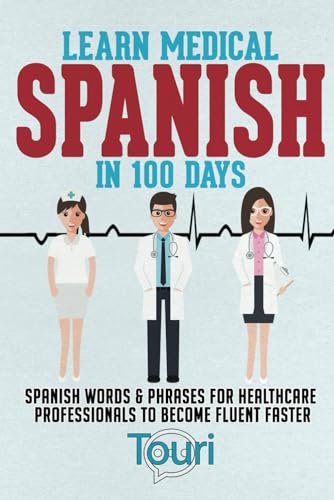
Learn Medical Spanish in 100 Days
Use this as the print companion for repeated medical Spanish practice. Build a daily phrase loop, then connect urgent-care phrases to intake, pain, medication, and follow-up vocabulary.
Scene safety and movement commands
Urgent-care and field situations often require clear instructions before a full conversation is possible. Keep these commands calm, respectful, and direct.
| English | Spanish | Use carefully when |
|---|---|---|
| Stay still. | Quedese quieto/a. | Movement may worsen injury. |
| Do not stand up. | No se levante. | Fall risk, dizziness, possible trauma. |
| Look at me. | Mireme. | You need attention before a simple instruction. |
| Breathe slowly. | Respire despacio. | The patient is anxious or short of breath. |
| We are going to help you. | Vamos a ayudarle. | Reassurance during assessment or transport. |
Fast symptom questions
Do not try to run a full clinical history from a memorized phrase list. Practice short questions that identify the next handoff: pain, breathing, allergies, medications, and whether someone else can help communicate.
| Question | Spanish | Follow-up path |
|---|---|---|
| What happened? | Que paso? | Use only for a brief opening account. |
| Do you have pain? | Tiene dolor? | Move to a pain scale or body-location question. |
| Do you have allergies? | Tiene alergias? | Confirm with interpreter support for medication decisions. |
| Do you take medicine? | Toma medicamentos? | Route detailed medication review to qualified staff and language support. |
| Is there someone who can help us communicate? | Hay alguien que nos pueda ayudar a comunicarnos? | Follow workplace policy; do not use minors for complex medical interpreting. |
For slower non-emergency intake practice, use Spanish intake questions for clinics and hospitals. For pain wording, connect this page to Spanish pain scale questions for healthcare professionals.
When to stop using memorized phrases
The most important urgent-care Spanish habit is knowing when your phrase knowledge is no longer enough. A memorized sentence can support a simple instruction, but it should not carry a high-risk medical conversation.
- Consent: Do not rely on beginner phrases for consent to procedures, transport decisions, refusals, or rights explanations.
- Diagnosis and treatment: Do not explain or interpret diagnoses, treatment options, or clinical risk from memory.
- Medication risk: Use interpreter support and qualified staff for new medications, dose changes, side effects, contraindications, pregnancy, pediatric dosing, or unclear medication history.
- Discharge and follow-up: Written and spoken instructions need accuracy; hand these conversations to the proper care team and language-access process.
- Documentation: If words will affect the medical record or legal record, use approved language support.
Medication, allergy, and pharmacy handoffs
EMTs and urgent-care teams often need a fast signal about allergies and medications. Treat the phrase as a doorway, not the final answer. If the response is unclear or affects care, slow down and route the conversation appropriately.
Use the medication workflow in Spanish phrases for medication instructions, and connect prescription pickup language to Spanish for pharmacy and prescription pickups. Those pages give slower practice for medication wording, teach-back, and interpreter boundaries.
A 20-minute EMT Spanish practice block
| Minute | Action | Goal |
|---|---|---|
| 0-3 | Read the first-minute sequence aloud. | Build a calm opening script. |
| 3-7 | Repeat the movement and breathing commands. | Make safety phrases automatic. |
| 7-12 | Roleplay pain, allergy, and medication questions. | Practice switching from question to handoff. |
| 12-16 | Cover the Spanish and recall from English. | Build active memory. |
| 16-20 | Say the interpreter-boundary line aloud. | Remember when to stop and escalate. |
How this connects to Touri books and audio
Learn Medical Spanish in 100 Days can be the written practice layer for daily repetition. Use it with the medical Spanish hub, then move between role-specific articles: front desk and scheduling, intake, pain scale, medication instructions, and urgent-care phrases.
The ideal audio routine is simple: hear the phrase, repeat it, picture the patient-facing moment, then answer from memory. That is especially useful for emergency and urgent-care language, where silent reading is not enough.
Source and prioritization note
This refresh was prioritized from Touri Search Console page data for March 30 through June 28, 2026. The EMT and urgent-care page had 33 impressions, 0 clicks, and average position about 9.94, making it a small but relevant near-win page inside the medical Spanish cluster. The content was expanded around safer role-specific usefulness, not around claims of medical authority.
FAQ
Can EMTs use these phrases instead of an interpreter?
No. These phrases are for practice, basic reassurance, and simple routine support. Use qualified interpreter support and workplace language-access procedures for consent, diagnosis, treatment decisions, medication risk, discharge instructions, documentation, and any safety-sensitive conversation.
What should EMTs learn first in Spanish?
Start with short safety commands, breathing questions, pain location, allergies, medications, transport reassurance, and a clear handoff phrase for interpreter or clinical support. Fast recall matters more than memorizing long translated paragraphs.
Is audio practice useful for urgent-care Spanish?
Yes. Urgent-care language is spoken under pressure, so learners need pronunciation, listening, and recall practice. Phrase tables help, but audio repetition and roleplay make the phrases easier to retrieve quickly.